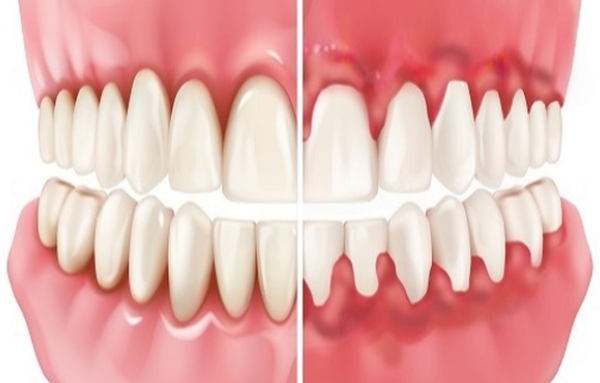
Periodontal diseases are often classified according to their severity. They range from acute gingivitis to chronic periodontitis, and more uncommon but serious acute necrotizing ulcerative gingivitis, which can be life-threatening.
Periodontitis
Periodontal disease is an advanced stage of gingivitis. Teeth are supported by the gums or gingiva. A tooth’s root is anchored to its socket by fibers called periodontal ligaments.
The gums do not attach to the teeth as firmly as one might think. A shallow, V-shaped gap called a sulcus exists between the teeth and the gums. Periodontal disease affects this gap. Eventually, in periodontal disease, the tissues supporting the tooth break down. If only the gums are involved in this breakdown, the disease is called gingivitis. If the connecting tissues and bone are involved, it is called periodontitis.